|
|
Vulnerability Assessment & Network Security Forums |
|||||||||
|
If through a vulnerability assessment, a network security issue is detected for the vulnerability below, applying the appropriate security patches in a timely matter is very important. If you have detected that your system has already been compromised, following CERT's Network Security recovery document will assist with recommended steps for system recovery. Home >> Browse Vulnerability Assessment Database >> Red Hat Local Security Checks >> RHSA-2005-386: devhelp Vulnerability Assessment Details
|
RHSA-2005-386: devhelp |
||
|
Check for the version of the devhelp packages Detailed Explanation for this Vulnerability Assessment Updated mozilla packages that fix various security bugs are now available. This update has been rated as having Important security impact by the Red Hat Security Response Team. Mozilla is an open source Web browser, advanced email and newsgroup client, IRC chat client, and HTML editor. Vladimir V. Perepelitsa discovered a bug in the way Mozilla handles anonymous functions during regular expression string replacement. It is possible for a malicious web page to capture a random block of browser memory. The Common Vulnerabilities and Exposures project (cve.mitre.org) has assigned the name CVE-2005-0989 to this issue. Doron Rosenberg discovered a bug in the way Mozilla displays pop-up windows. If a user choses to open a pop-up window whose URL is malicious javascript, the script will be executed with elevated rights. (CVE-2005-1153) A bug was found in the way Mozilla handles the javascript global scope for a window. It is possible for a malicious web page to define a global variable known to be used by a different site, permiting malicious code to be executed in the context of the site. (CVE-2005-1154) Michael Krax discovered a bug in the way Mozilla handles favicon links. A malicious web page can programatically define a favicon link tag as javascript, executing arbitrary javascript with elevated rights. (CVE-2005-1155) Michael Krax discovered a bug in the way Mozilla installed search tests. If a user chooses to install a search test from a malicious site, the new test could silently overwrite an existing test. This could permit the malicious test to execute arbitrary code and stealm sensitive information. (CVE-2005-1156 CVE-2005-1157) A bug was found in the way Mozilla validated several XPInstall related javascript objects. A malicious web page could pass other objects to the XPInstall objects, resulting in the javascript interpreter jumping to arbitrary locations in memory. (CVE-2005-1159) A bug was found in the way the Mozilla privileged UI code handled DOM nodes from the content window. A malicious web page could install malicious javascript code or steal data requiring a user to do commonplace actions such as clicking a link or opening the context menu. (CVE-2005-1160) Users of Mozilla are advised to upgrade to this updated package which contains Mozilla version 1.7.7 to correct these issues. Solution : http://rhn.redhat.com/errata/RHSA-2005-386.html Network Security Threat Level: High Networks Security ID: Vulnerability Assessment Copyright: This script is Copyright (C) 2005 Tenable Network Security |
||
|
Cables, Connectors |


HP EliteBook 850 G5 15.6" 64GB RAM 2TB SSD Intel Quad Core i7 4.80GHz AMD Radeon
$443.00
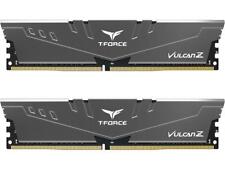
Team T-FORCE VULCAN Z 16GB (2 x 8GB) 288-Pin PC RAM DDR4 3200 (PC4 25600) XMP
$38.99
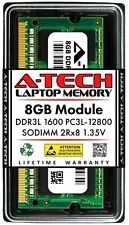
A-Tech 8GB DDR3 1600 PC3-12800 Laptop SODIMM 204-Pin Memory RAM PC3L DDR3L 1x 8G
$13.99
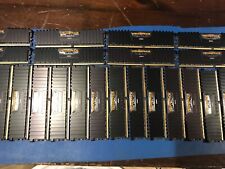
Corsair Vengeance LPX 32GB PC4-25600 (DDR4-3200) Memory NEVER USED LOOSE STICKS
$40.00
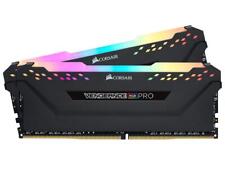
CORSAIR Vengeance RGB Pro 32GB (2 x 16GB) 288-Pin PC RAM DDR4 3600 (PC4 28800)
$79.95

HyperX FURY DDR3 8GB 16GB 32GB 1600 MHz PC3-12800 Desktop RAM Memory DIMM 240pin
$12.90
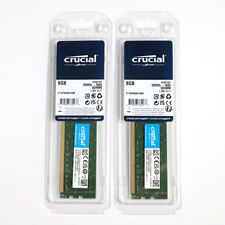
Crucial 16GB (2x 8GB) Kit DDR3L 1600MHz PC3-12800 UDIMM Desktop 240-Pin CL11 RAM
$21.33
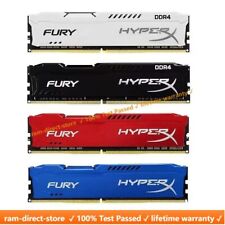
HyperX FURY RAM DDR4 16GB 8GB 32GB 4GB 3200 2666 2400 2133 Desktop Memory DIMM
$14.85

16GB 8GB 4GB DDR2 800MHz PC2-6400U 240Pin intel DIMM Desktop PC Memory SDRAM LOT
$79.99

HyperX FURY DDR4 64GB (4x16GB) 3200MHz PC4-25600 Desktop RAM Memory DIMM 288PIN
$129.95
|
||
|
No Discussions have been posted on this vulnerability. |