|
|
Vulnerability Assessment & Network Security Forums |
|||||||||
|
If through a vulnerability assessment, a network security issue is detected for the vulnerability below, applying the appropriate security patches in a timely matter is very important. If you have detected that your system has already been compromised, following CERT's Network Security recovery document will assist with recommended steps for system recovery. Home >> Browse Vulnerability Assessment Database >> Debian Local Security Checks >> [DSA311] DSA-311-1 linux-kernel-2.4.18 Vulnerability Assessment Details
|
[DSA311] DSA-311-1 linux-kernel-2.4.18 |
||
|
DSA-311-1 linux-kernel-2.4.18 Detailed Explanation for this Vulnerability Assessment A number of vulnerabilities have been discovered in the Linux kernel. CVE-2002-0429: The iBCS routines in arch/i386/kernel/traps.c for Linux kernels 2.4.18 and earlier on x86 systems permit local users to kill arbitrary processes via a binary compatibility interface (lcall). CVE-2003-0001: Multiple ethernet Network Interface Card (NIC) device drivers do not pad frames with null bytes, which permits remote attackers to obtain information from previous packets or kernel memory by using malformed packets. CVE-2003-0127: The kernel module loader permits local users to gain root rights by using ptrace to attach to a child process that is spawned by the kernel. CVE-2003-0244: The route cache implementation in Linux 2.4, and the Netfilter IP conntrack module, permits remote attackers to cause a denial of service (CPU consumption) via packets with forged source addresses that cause a large number of hash table collisions related to the PREROUTING chain. CVE-2003-0246: The ioperm system call in Linux kernel 2.4.20 and earlier does not properly restrict rights, which permits local users to gain read or write access to certain I/O ports. CVE-2003-0247: Vulnerability in the TTY layer of the Linux kernel 2.4 permits attackers to cause a denial of service ("kernel oops"). CVE-2003-0248: The mxcsr code in Linux kernel 2.4 permits attackers to modify CPU state registers via a malformed address. CVE-2003-0364: The TCP/IP fragment reassembly handling in the Linux kernel 2.4 permits remote attackers to cause a denial of service (CPU consumption) via certain packets that cause a large number of hash table collisions. This advisory covers only the i386 (Intel IA32) architectures. Other architectures will be covered by separate advisories. For the stable distribution (woody) on the i386 architecture, these problems have been fixed in kernel-source-2.4.18 version 2.4.18-9, kernel-image-2.4.18-1-i386 version 2.4.18-8, and kernel-image-2.4.18-i386bf version 2.4.18-5woody1. For the unstable distribution (sid) these problems are fixed in the 2.4.20 series kernels based on Debian sources. We recommend that you update your kernel packages. If you are using the kernel installed by the installation system when the "bf24" option is selected (for a 2.4.x kernel), you should install the kernel-image-2.4.18-bf2.4 package. If you installed a different kernel-image package after installation, you should install the corresponding 2.4.18-1 kernel. You may use the table below as a guide. | If "uname -r" shows: | Install this package: | 2.4.18-bf2.4 | kernel-image-2.4.18-bf2.4 | 2.4.18-386 | kernel-image-2.4.18-1-386 | 2.4.18-586tsc | kernel-image-2.4.18-1-586tsc | 2.4.18-686 | kernel-image-2.4.18-1-686 | 2.4.18-686-smp | kernel-image-2.4.18-1-686-smp | 2.4.18-k6 | kernel-image-2.4.18-1-k6 | 2.4.18-k7 | kernel-image-2.4.18-1-k7 NOTE: that this kernel is not binary compatible with the previous version. For this reason, the kernel has a different version number and will not be in [...] Solution : http://www.debian.org/security/2003/dsa-311 Network Security Threat Level: High Networks Security ID: Vulnerability Assessment Copyright: This script is (C) 2005 Michel Arboi |
||
|
Cables, Connectors |

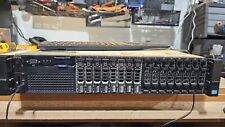
Dell PowerEdge R720 Server - 2x8c CPU,256Gb RAM, 128Gb SSD/3x900Gb SAS, Proxmox
$340.00
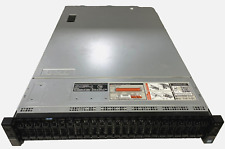
DELL PowerEdge R730XD 24x 2.5" Server Dual 750W Dual Heatsink - BareBones TESTED
$269.99
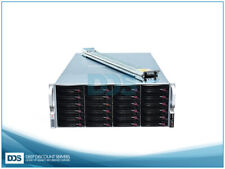
Supermicro 4U 36 Bay Storage Server 2.4Ghz 8-C 128GB 1x1280W Rails TrueNAS ZFS
$712.98
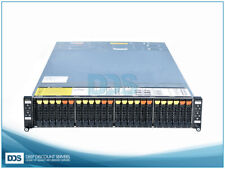
H261-Z61 2U 24SFF AMD Server 8x EPYC 7551 256-Cores 256GB RAM 8x25G NIC 2x2200W
$2612.18
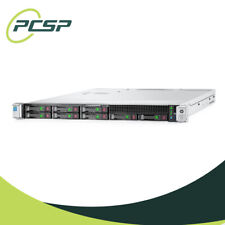
HP Proliant DL360 Gen9 28 Core SFF Server 2X E5-2680 V4 16GB RAM P440ar No HDD
$196.95
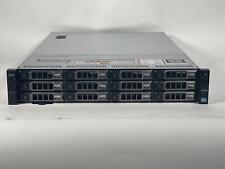
Dell PowerEdge R720XD Xeon E5-2680 V2 2.8GHz 20 Cores 256GB RAM 12x4TB
$510.00
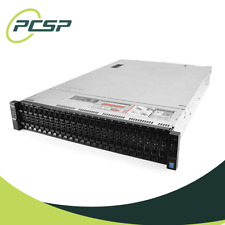
Dell PowerEdge R730XD 28 Core Server 2X Xeon E5-2680 V4 H730 128GB RAM No HDD
$389.99
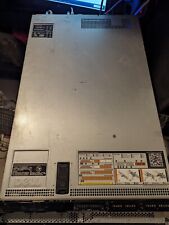
Dell PowerEdge R620 Server 2x E5-2660 v1 2.2GHz 16 Cores 256GB RAM 2x 300GB HDD
$79.19

DELL PowerEdge R730 Server 2x E5-2680v4 2.4GHz =28 Cores 32GB H730 4xRJ45
$284.00

HP ProLiant DL380 Gen9 16SFF 2x E5-2680v4 2.4GHz =28 Cores 64GB P840 4xRJ45
$353.00
|
||
|
No Discussions have been posted on this vulnerability. |